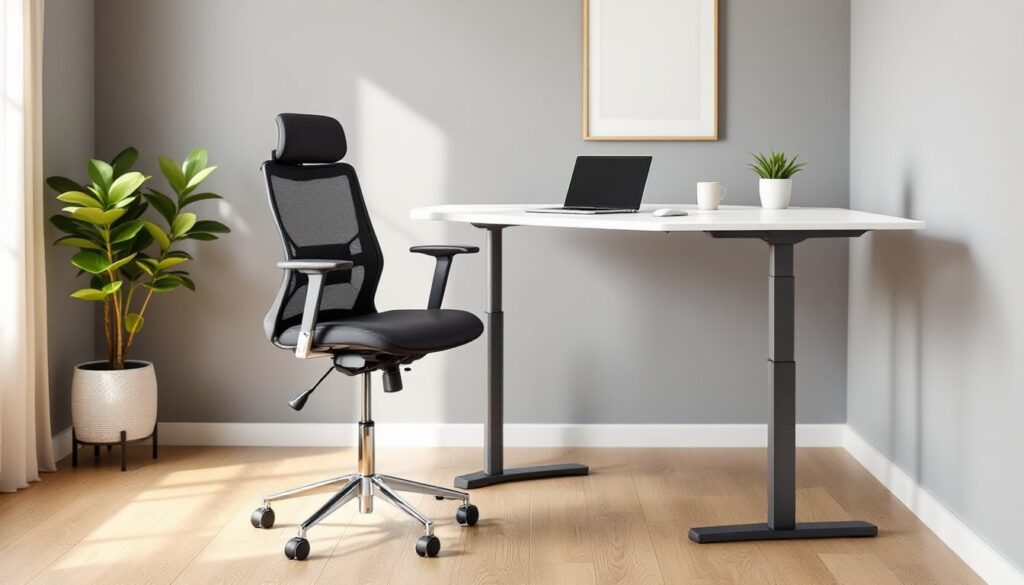

Standing desks have become a staple in home offices, but most users quickly realize that standing all day isn’t practical, or healthy. Enter the tall office chair, also called a drafting chair or standing desk chair. These specialized seats bridge the gap between traditional office chairs and full standing, letting users perch at heights that align with adjustable desks set anywhere from 36 to 48 inches. They’re not just taller versions of regular chairs: they feature extended pneumatic lifts, footrests, and reinforced bases designed for stability at elevations where standard chairs wobble or max out. For anyone serious about ergonomic flexibility, a proper tall chair is non-negotiable.
Table of Contents
ToggleKey Takeaways
- A tall office chair for standing desk fills the 6- to 12-inch height gap that standard chairs leave, enabling healthier alternating between sitting and standing positions throughout the day.
- Choose a tall office chair with a seat height range of 24 to 33 inches, a Class 3 or 4 pneumatic lift, an adjustable footrest, and a base diameter of at least 26 inches for optimal stability and comfort.
- Match your tall office chair seat height to your standing desk height using this guide: desk at 38–40 inches requires seat height 24–26 inches; desk at 42–44 inches needs 28–30 inches; desk at 46–48 inches demands 31–33 inches.
- Proper tall office chair setup requires aligning thighs parallel to the floor, positioning the footrest 8–12 inches below the seat, and adjusting lumbar support to the small of your back for maximum ergonomic benefit.
- Maintain your tall office chair by inspecting the pneumatic cylinder every few months, lubricating the adjustment lever, replacing worn casters promptly, and budgeting for cylinder replacement every 3–5 years with regular 6+ hour daily use.
Why You Need a Tall Office Chair for Your Standing Desk Setup
A standing desk isn’t an either-or proposition. Research on workplace ergonomics consistently shows that alternating between sitting and standing reduces lower back strain, improves circulation, and sustains focus better than static postures. But here’s the catch: most standard office chairs top out at 21 inches seat height, which leaves a 6- to 12-inch gap when the desk is raised to standing height (typically 38–46 inches for average users).
A tall office chair fills that void. With seat heights ranging from 21 to 33 inches, these chairs let users adopt a perched or semi-standing position that takes weight off the legs without forcing a full sit. This posture, often called “leaning” or “perching”, keeps the hip angle more open than traditional sitting, which can ease pressure on the lumbar spine and hamstrings.
Beyond comfort, tall chairs support task flexibility. Detailed work like drafting, soldering, or reading hard-copy documents often benefits from a slightly elevated vantage point. Architects, illustrators, and engineers have relied on drafting stools for decades: the modern tall office chair simply adapts that concept for adjustable-desk users who need seamless transitions throughout the day.
Skip the makeshift solutions, bar stools, kitchen chairs, or stacked cushions, because they lack the lumbar support, adjustability, and stability required for hours of focused work. A purpose-built tall chair is a one-time investment that pays dividends in reduced fatigue and better posture.
Key Features to Look for in a Tall Office Chair
Not all tall chairs are created equal. When evaluating models, focus on features that directly impact comfort, safety, and longevity.
Height Adjustment Range and Pneumatic Lift Quality
The pneumatic lift cylinder is the heart of any adjustable chair. For tall office chairs, look for a minimum adjustment range of 24 to 33 inches seat height. This range accommodates desk heights from roughly 38 to 50 inches, covering most standing desk configurations.
Cheap cylinders lose pressure over time, causing the seat to sink mid-task. Class 4 gas lifts (rated for 200–300 pounds) are standard, but heavier users or those who adjust frequently should seek Class 3 cylinders, which offer better durability and smoother operation. Check the manufacturer’s weight rating, some tall chairs cut corners on lift quality to save cost, which leads to failure within six months.
Test the adjustment lever. It should engage with minimal effort and hold position firmly. If you’re buying online, read reviews specifically mentioning lift performance after 3–6 months of use.
Footrest and Base Stability Considerations
At elevated seat heights, feet often dangle, which strains the back of the thighs and disrupts circulation. A built-in footrest ring (also called a footring or foot rail) is essential. It should be height-adjustable or positioned 8–12 inches below the seat to accommodate different leg lengths.
Footrests come in two styles: fixed rings welded to the chair base, and adjustable rings mounted on a separate post. Fixed rings are bombproof but limit customization. Adjustable rings offer better fit but introduce another mechanical component that can loosen over time. Tighten footring bolts every few months to prevent wobble.
Base stability matters more on tall chairs than standard ones. The higher center of gravity increases tip risk. Look for a five-star base with a diameter of at least 26 inches. Oversized casters (3-inch diameter or larger) improve mobility on carpet and hardwood without compromising stability. Some models use a reinforced steel base instead of nylon, worth the extra weight if the chair will see daily use or support users over 225 pounds.
If you’re handy and want a DIY approach, building an adjustable-height stool using pipe fittings and salvaged lumber is doable, though pneumatic lift mechanisms require specialty parts best sourced from industrial suppliers.
How to Choose the Right Tall Chair for Your Standing Desk Height
Matching chair height to desk height isn’t guesswork, it’s geometry. Start by measuring your standing desk at its highest and lowest positions. Most desks adjust between 28 and 48 inches, but verify yours with a tape measure, not the manufacturer’s specs (which can be off by an inch or two).
For ergonomic perching, your seat height should position your thighs parallel to the floor or angled slightly downward (5–10 degrees). Your elbows should rest at or just below desk level with shoulders relaxed. Here’s a quick reference:
- Desk at 38–40 inches: Seat height 24–26 inches
- Desk at 42–44 inches: Seat height 28–30 inches
- Desk at 46–48 inches: Seat height 31–33 inches
These numbers assume average torso-to-leg ratios. Taller individuals (6’2″ and up) may need an extra inch or two: shorter users (under 5’4″) may need less. If possible, test a chair at a showroom or order from a retailer with a 30-day return policy.
Consider whether you’ll use the chair exclusively at standing height or if it needs to double as a standard sitting chair when the desk is lowered. If so, verify the minimum seat height drops to 18–21 inches, many tall chairs sacrifice low-end range to achieve high-end reach.
Backrest height and lumbar support also scale with seat height. A backrest that ends mid-shoulder blade on a standard chair may sit too low when the seat is raised 8 inches. Look for backrests at least 20 inches tall, with adjustable lumbar pads that can reposition as seat height changes.
For homeowners exploring workspace design ideas, platforms like Houzz offer photo galleries of home offices with standing desks and ergonomic seating, which can help visualize how a tall chair fits into your layout before purchasing.
Setting Up Your Tall Office Chair for Optimal Ergonomics
Buying the right chair is half the battle. Setup determines whether it actually delivers ergonomic benefits or becomes an expensive perch you tolerate.
Step 1: Adjust Seat Height
Raise your desk to standing height. Sit on the chair with feet flat on the footrest. Adjust the seat until your thighs are parallel to the floor and your elbows align with the desk surface when your upper arms hang relaxed. If your shoulders creep toward your ears, the seat is too low: if your wrists bend upward to reach the keyboard, it’s too high.
Step 2: Position the Footrest
Your knees should form a 90–110 degree angle when feet rest on the ring. If the footrest is too low, your thighs bear excessive weight: too high, and your knees lift awkwardly. Adjustable footrings should sit 8–12 inches below the seat bottom.
Step 3: Set Lumbar Support
Adjust the lumbar pad to the small of your back, usually just above belt level. The backrest should support your spine without forcing you to lean back. If the chair has recline tension, set it firm enough that you don’t tip backward when reaching for a mouse but loose enough to allow occasional stretching.
Step 4: Check Armrests (If Present)
Many tall chairs omit armrests because they interfere with desk edges at variable heights. If yours has them, adjust so your forearms rest lightly when elbows are bent 90 degrees. Armrests should never force your shoulders upward or prevent you from rolling close to the desk.
Step 5: Test Stability
Sit and shift your weight side to side. A properly balanced chair won’t tip or creak. If you feel wobble, check that all caster stems are fully inserted and the base is free of cracks. Tighten any visible bolts, especially those securing the footrest and backrest.
Safety Note: Wear closed-toe shoes when adjusting tall chairs. The pneumatic lever can release suddenly, and a descending seat can pinch or bruise bare feet.
For DIYers who enjoy hands-on furniture projects, sites like The Handyman’s Daughter feature tutorials on modifying or building custom seating, though retrofitting a pneumatic lift mechanism into a homemade stool requires metalworking skills and access to specialty hardware.
Ongoing Maintenance
Every few months, inspect the lift cylinder for leaks (look for oily residue around the shaft). Lubricate the pneumatic lever pivot with a drop of machine oil if it stiffens. Vacuum dust from the base and casters, debris jams wheels and accelerates wear on carpet.
Replace worn casters promptly. A single locked wheel throws off balance and puts uneven strain on the base, which can crack welds or stress the lift cylinder. Hard-floor casters cost $15–25 for a set of five and install in minutes with a firm pull and push.
If your chair sees 6+ hours of daily use, expect the pneumatic cylinder to wear out in 3–5 years. Replacement cylinders run $30–60 and swap out with basic hand tools, no need to replace the entire chair.
Conclusion
A tall office chair transforms a standing desk from a single-posture novelty into a flexible ergonomic workstation. Prioritize pneumatic lift quality, footrest adjustability, and base stability over aesthetics. Measure twice before buying, chair and desk heights must align, or you’ll fight poor posture every day. Set it up methodically, maintain it quarterly, and it’ll support thousands of hours of productive, comfortable work.