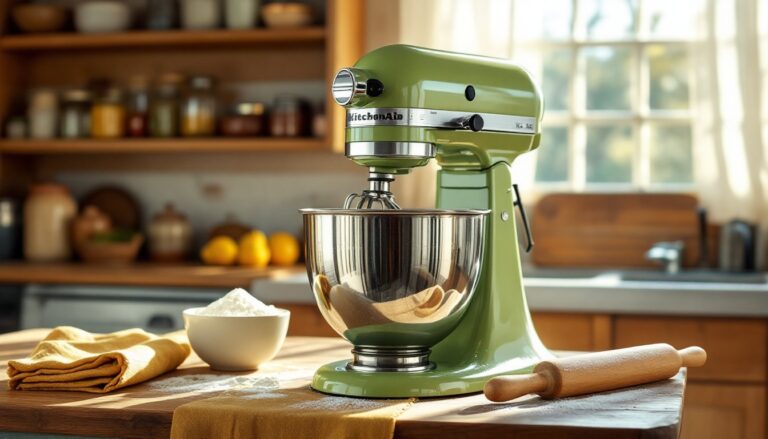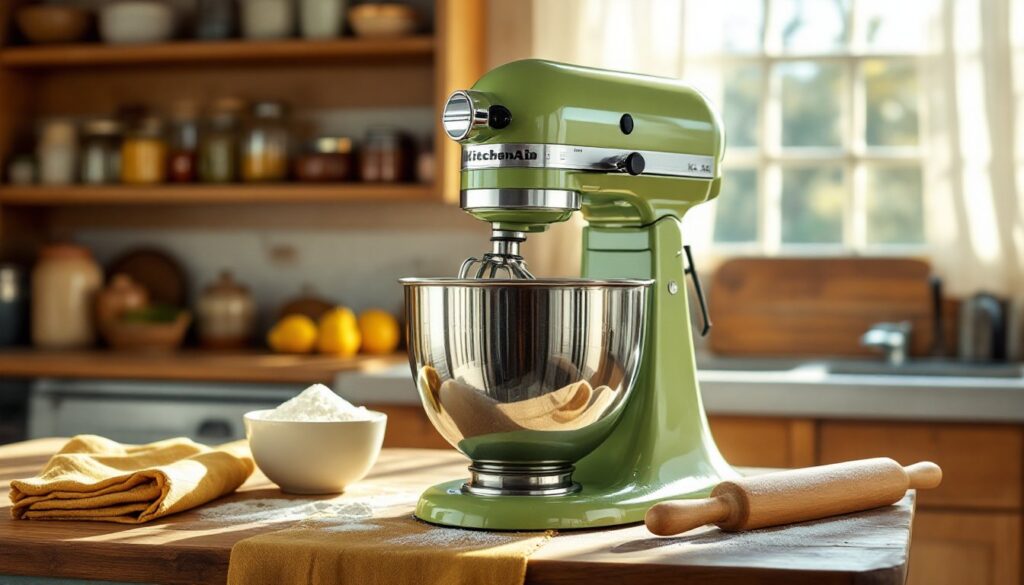

Vintage KitchenAid stand mixers aren’t just kitchen appliances, they’re functional heirlooms with all-metal gearing, repairable parts, and a weight that says “built to last.” While modern mixers lean on plastic components and planned obsolescence, pre-1990s KitchenAid models often outlive their owners with minimal maintenance. Whether someone’s hunting for a Hobart-era K45 or a mid-century tilt-head in avocado green, these machines deliver serious torque and character that new models can’t replicate. This guide walks through identifying authentic vintage units, sourcing them strategically, evaluating mechanical condition, and restoring them to decades more service.
Table of Contents
ToggleKey Takeaways
- Vintage KitchenAid mixers feature all-metal construction and direct-drive planetary gear systems that deliver superior durability and torque compared to modern plastic-based models.
- Authentic vintage KitchenAid units can be identified by Hobart-era markings, serial number formats, and noticeably heavier all-metal housings manufactured before 1986.
- Finding a vintage KitchenAid mixer at estate sales, local marketplaces, and antique shops often yields well-maintained units at prices lower than collector premiums.
- When evaluating a used vintage KitchenAid mixer, prioritize testing motor function across all speeds, checking gear lubrication, and inspecting the attachment hub for wear before purchase.
- Restoring a vintage KitchenAid requires essential maintenance tasks including regreasing gears with food-grade lubricant, replacing worn motor brushes, and periodic speed-controller cleaning.
- Long-term ownership of a vintage KitchenAid mixer becomes economical at approximately $5 per year of service, plus strong resale value retention makes it a worthwhile investment.
Why Vintage KitchenAid Mixers Are Worth the Investment
All-metal construction sets vintage KitchenAid mixers apart from contemporary models. Pre-1985 units manufactured by Hobart feature steel gears, cast-metal housings, and motors designed for commercial-grade duty cycles. The K45, KSM90, and KSM150 models from the 1960s through early 1990s use direct-drive planetary gear systems that distribute torque evenly across attachments, no belt slippage or gear-stripped failures common in budget mixers.
Replacement parts remain widely available through third-party suppliers and the KitchenAid service network. Unlike appliances with proprietary assemblies, vintage mixers use standardized worm gears, grease seals, and carbon brushes that any competent DIYer can swap out. Repair manuals for most models circulate freely online, and exploded diagrams make disassembly straightforward.
Cost per year of service often beats new mixers. A $150 vintage unit that runs 30 years costs $5 annually. A $400 modern mixer lasting 10 years runs $40 per year. Factor in that vintage models hold resale value, functioning Hobart-era mixers often sell for more than purchase price after restoration, and the economics tilt decisively toward older iron.
Identifying Authentic Vintage KitchenAid Models
Check the model and serial number stamped on the underside of the motor housing. Hobart-manufactured mixers (pre-1986) carry serial numbers beginning with a letter followed by numbers. Post-Hobart models use a different format. Cross-reference the serial number with KitchenAid’s date-code system, the first two characters typically indicate production year.
Hobart-era mixers display a distinct “Hobart, Ohio” or “Made in USA” stamp on the base. After Whirlpool acquired KitchenAid in 1986, marking changed. Models from the Hobart period weigh noticeably more due to cast-metal housings versus pressed steel or composite materials in later production.
Key vintage models to recognize:
• K45 (1960s–1980s): 4.5-quart tilt-head, workhorse for home bakers. Ten-speed control, often found in white, almond, or harvest gold.
• KSM90 (1980s–1990s): Bowl-lift design, 4.5-quart capacity. Commercial-style C-frame, excellent for heavy dough.
• KSM150 (1990s): Transitional model before full Whirlpool redesign. Retains most metal gearing but uses updated speed controller.
• K5-A (1960s–1980s): Five-quart bowl-lift, often found in avocado, poppy, or coppertone finishes.
Interior design enthusiasts often gravitate toward vintage mixers in period colors, avocado green, harvest gold, and poppy red command premium prices. Attachment hubs on vintage models use the same power-takeoff fitting as modern KitchenAid attachments, ensuring pasta rollers, grinders, and sausage stuffers remain compatible across decades.
Where to Find Vintage KitchenAid Mixers for Sale
Estate sales yield the highest concentration of well-maintained vintage mixers. Homeowners who purchased KitchenAid units in the 1970s or 1980s often kept them in regular service, and estate liquidators price them below collector market rates. Arrive early and inspect mechanicals on-site, estate sales rarely offer returns.
Online marketplaces like Facebook Marketplace, Craigslist, and OfferUp list local options that avoid shipping costs. Search terms like “Hobart KitchenAid,” “vintage mixer,” and specific model numbers filter results. Message sellers with specific questions about motor noise, speed-control function, and whether the unit has been serviced recently.
Thrift stores and Goodwill locations occasionally stock vintage mixers, though condition varies widely. Most thrift stores lack testing facilities, so plan to assess mechanicals at home with a return window in mind. Salvation Army Family Stores and regional thrift chains sometimes offer brief return periods on appliances.
Antique malls and vintage kitchenware shops price mixers at collector premiums but often guarantee functionality. Dealers who specialize in mid-century kitchen goods sometimes offer refurbished units with fresh grease packs and replacement parts already installed. Expect to pay 40–60% more than private-party listings but gain peace of mind on mechanical condition.
Online auctions (eBay, Etsy) expand geographic reach but add shipping complexity. A KitchenAid mixer weighs 20–25 pounds, and shipping costs run $30–$50 depending on distance. Request additional photos of the serial number plate, attachment hub, and motor housing for pre-purchase evaluation.
What to Look for When Buying a Used KitchenAid Mixer
Motor function tops the evaluation checklist. Plug the unit in and run through all speed settings. Listen for grinding, squealing, or uneven motor tone, these indicate worn gears or failing motor bushings. The mixer should ramp smoothly between speeds without hesitation or stalling under no-load conditions.
Inspect the speed control plate (the dial or lever). Early models use a mechanical governor: later units employ electronic speed controllers. Erratic speed changes or failure to hold consistent RPM suggest controller issues. Replacement speed-control assemblies run $40–$80, so factor that into purchase price negotiation.
Check gear lubrication by removing the planetary assembly (the hub where attachments mount). The worm gear should show clean, gray-white grease without metal shavings or black discoloration. Dried-out or contaminated grease causes accelerated wear. Re-greasing requires food-grade Benalene 930-2 grease or equivalent, about $15 for a tube that’ll handle three service intervals.
Examine the attachment hub and pin. The power-takeoff pin should rotate freely without excessive play. Wobble indicates worn hub bearings. The retaining spring inside the hub should engage firmly, loose springs let attachments slip during operation.
Cosmetic condition affects value but not function. Chipped paint, scratched bowls, and discolored housings don’t impact performance. Vintage mixer collectors often prefer original finishes, but DIYers can strip and repaint housings with appliance epoxy for a custom look.
Avoid mixers with:
• Cracked or broken motor housings (structural integrity compromised)
• Burnt electrical smell (motor windings damaged)
• Stripped attachment hub threads (requires professional machining)
• Corroded internal wiring (fire hazard, especially in units stored in damp basements)
How to Restore and Refurbish Your Vintage KitchenAid Mixer
Disassembly starts with unplugging the unit and removing the mixing bowl, beater, and planetary assembly. Most vintage models require a flathead screwdriver to remove the planetary retaining ring, twist counterclockwise while pressing inward. The motor housing separates from the base via four to six screws accessible from underneath.
Regreasing the gears is the single most important maintenance task. Once the planetary and worm gear are exposed:
- Wipe old grease completely using shop rags and denatured alcohol. Remove all residue, old grease mixed with new causes premature breakdown.
- Apply Benalene 930-2 or Super Lube 41150 (food-safe synthetic grease) to the worm gear teeth. Use approximately one tablespoon: excess grease gets flung into the motor housing.
- Coat the planetary gear’s internal ring gear with the same grease. Rotate the gear by hand to distribute lubricant evenly.
- Reinstall the planetary, ensuring the drive pin engages the worm gear slot fully.
Motor brushes wear over decades of use and should be inspected during disassembly. Access varies by model, K45 units have brush caps on opposite sides of the motor housing. Brushes shorter than 1/4 inch require replacement. KitchenAid OEM brushes cost $12–$18 per pair: generic carbon brushes work but may arc more.
Speed controller cleaning improves erratic performance. Kitchen appliance experts recommend contact cleaner (CRC QD Electronic Cleaner) sprayed into the controller assembly while cycling through speeds. Let dry completely before reassembly.
Paint restoration transforms cosmetic condition. Strip old paint with Citristrip gel stripper (less hazardous than methylene chloride formulas). Neutralize with water, let dry 24 hours, then prime with Rust-Oleum Appliance Epoxy Primer. Topcoat with appliance epoxy in desired color, two coats, wet-sanded with 400-grit between applications.
Reassembly reverses disassembly. Torque housing screws finger-tight plus 1/4 turn, overtightening cracks vintage die-cast housings. Test all speeds under no-load, then with a stiff dough to verify gear engagement and motor performance.
Maintaining Your Vintage KitchenAid for Long-Term Performance
Re-grease gears every 5–7 years under typical home use (weekly mixing sessions). Commercial or heavy-dough users should service annually. Dried grease sounds like marbles rattling inside the housing, address immediately to prevent gear damage.
Beater-to-bowl clearance requires periodic adjustment. The flat beater should clear the bowl bottom by 1/16 inch, close enough to scrape efficiently without metal-on-metal contact. Adjust via the screw inside the motor-housing hinge (tilt-head models) or the bowl-lift arm (bowl-lift models). Turn clockwise to lower, counterclockwise to raise.
Store mixers in dry, temperature-stable locations. Basements and unheated garages promote moisture intrusion and corrosion. Cover the mixer with a cloth cover to prevent dust accumulation in the motor vents.
Inspect power cords for cracking or exposed wire, especially near the plug and motor housing entry point. Vintage appliances often use cloth-wrapped cords that degrade over decades. Rewiring requires basic soldering skills, use 14-gauge SJOW cord for adequate current capacity.
Run the mixer at least once monthly even during periods of light use. Prolonged inactivity lets grease settle and motor brushes develop flat spots. A five-minute no-load run keeps mechanicals fresh.
Replacement parts availability remains strong. Online suppliers like eReplacementParts.com, RepairClinic.com, and specialty KitchenAid parts vendors stock gears, seals, brushes, and control assemblies for most vintage models. Part costs:
• Worm gear follower: $12–$18
• Planetary assembly: $30–$50
• Speed control plate: $40–$80
• Motor brushes: $12–$18
• Grease seal: $6–$10
Keep the original serial number plate intact, it documents provenance and aids parts lookup. Replacement bowls and beaters don’t need to be vintage: modern KitchenAid accessories fit Hobart-era attachment hubs perfectly.
Conclusion
Vintage KitchenAid mixers reward owners who invest time in proper selection and maintenance. Metal gearing, repairable design, and proven durability make these units practical tools rather than nostalgia pieces. Proper gear lubrication, periodic electrical inspection, and attention to wear indicators keep vintage mixers running for generations. The combination of solid engineering and straightforward mechanical access means a $100 estate-sale find can deliver decades of reliable service with minimal investment beyond grease and elbow work.