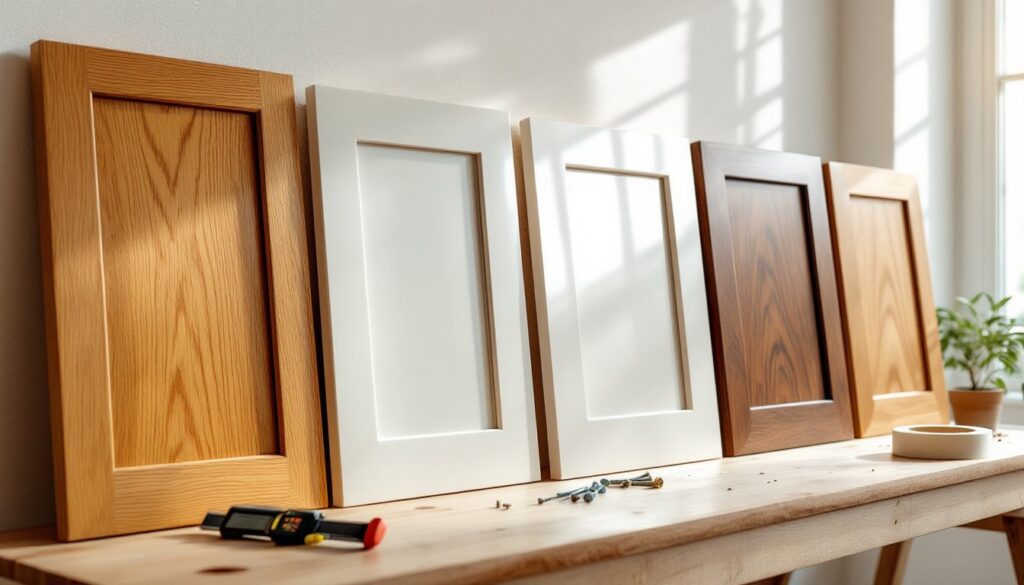

Choosing the right material for kitchen cabinets is one of the most consequential decisions in a kitchen renovation or new build. The material determines not just the look but the durability, cost, maintenance needs, and even the resale value of the home. With options ranging from classic solid wood to engineered composites and modern laminates, understanding what kitchen cabinets are made of, and the trade-offs involved, helps homeowners avoid expensive mistakes. This guide breaks down the most common types of kitchen cabinet materials, their strengths and weaknesses, and how to match the right one to a project’s budget and lifestyle needs.
Table of Contents
ToggleKey Takeaways
- Solid wood kitchen cabinets offer unmatched longevity and can be refinished multiple times, but cost two to four times more than plywood or MDF alternatives.
- Plywood provides the best balance of strength, stability, and affordability, making it an ideal choice for DIY builders and cost-conscious homeowners.
- Kitchen cabinet material choice affects durability, maintenance, moisture resistance, weight, and installation requirements—mixing materials like plywood boxes with MDF doors optimizes cost and performance.
- MDF excels for painted finishes with a glass-like appearance, while thermofoil and laminate cabinets offer low-maintenance, budget-friendly solutions that resist scratches and stains but cannot be refinished.
- Base cabinets near sinks should use plywood or solid wood, never particleboard, and all edges and surfaces of MDF or particleboard must be sealed to prevent moisture damage in humid climates.
- Understanding cabinet anatomy—the box, doors, and shelving—helps homeowners avoid expensive mistakes and build kitchens that last 20+ years instead of just five.
Why Kitchen Cabinet Material Matters More Than You Think
Cabinet boxes, door panels, and shelving are the workhorses of a kitchen. They endure daily impacts from pots, pans, moisture, heat, and cleaning chemicals. A cheap particleboard box might look fine for the first year, but sag and warp once humidity creeps in. Conversely, paying for solid walnut throughout when only the door faces show might blow the budget without adding meaningful performance.
The material choice affects more than longevity. It dictates which joinery techniques a cabinet shop can use (dado joints work great in plywood, not so much in MDF), how well the cabinet holds screws over time, and whether a homeowner can refinish or paint the surface down the road. Weight is another factor, solid wood and plywood are heavier, requiring robust wall anchors and potentially reinforced wall studs in older homes with thin drywall. Budget and timeline matter too: lead times for custom solid-wood cabinets can stretch six to twelve weeks, while stock laminate cabinets ship in days.
Understanding types of kitchen cabinet materials means looking at the entire cabinet anatomy: the box (or carcass), the door and drawer fronts, and the shelving. Many cabinets mix materials, plywood boxes with MDF doors, for instance, to balance cost and performance. Knowing what’s hidden behind the veneer is the difference between a twenty-year kitchen and a five-year one.
Solid Wood Cabinets: Timeless Beauty and Lasting Quality
Solid wood remains the gold standard for kitchen cabinets. Common species include oak, maple, cherry, hickory, and birch. Each has distinct grain patterns and hardness ratings: maple is tight-grained and takes paint beautifully, while oak shows prominent grain that looks best under stain. Cherry darkens with age, developing a rich patina that many homeowners prize.
The main advantage is longevity. Solid wood holds screws tenaciously, resists sagging even with heavy dinnerware, and can be sanded and refinished multiple times. A well-built solid-wood cabinet box, joined with dovetails or mortise-and-tenon, can outlast the house itself. The natural material also manages moisture better than some composites, expanding and contracting slightly with seasonal humidity without delaminating.
Downsides include cost, expect to pay two to four times more than plywood or MDF equivalents, and weight. Installation requires locating studs accurately and using appropriate fasteners: toggle bolts or hollow-wall anchors won’t cut it. Solid wood can also move with humidity changes, so proper sealing and finish are critical. Unfinished or poorly sealed wood in a humid climate may warp or develop gaps at joints.
From a DIY standpoint, working with solid wood demands more skill. Joinery tools like a router for dados, a table saw for rip cuts to consistent thickness, and clamps for glue-ups are essential. For face-frame cabinets, pocket-hole joinery (using a jig like a Kreg) is popular and accessible to intermediate builders. Anyone considering a custom solid-wood build should budget time for material acclimation, let lumber sit in the workspace for at least 48 hours to stabilize moisture content before cutting.
Plywood Cabinets: The Smart Balance of Strength and Value
Plywood is the sweet spot for many cabinet projects: strong, stable, and more affordable than solid wood. Cabinet-grade plywood typically comes in ¾-inch thickness for boxes and ½-inch for back panels. The most common types are hardwood plywood (birch, oak, or maple face veneers) and softwood plywood (fir or pine cores with hardwood veneer).
Plywood’s cross-laminated construction resists warping and provides excellent screw-holding power. Unlike particleboard, it won’t crumble if a hinge screw needs repositioning. The material also handles moisture better than MDF or particleboard, making it a safer choice near sinks or dishwashers. Edge-banding or solid-wood trim hides the layered core, giving a clean finish that can be painted or stained.
Cost-wise, expect plywood to run about 30–50% less than equivalent solid wood, though prices fluctuate with lumber markets. A 4×8 sheet of ¾-inch birch plywood might cost $60–$90, depending on grade and region. For DIYers, cutting plywood efficiently to minimize waste is key, use a cutlist and lay out all parts before making the first cut. A circular saw with a straight-edge guide works for breaking down full sheets: a table saw or track saw improves precision for smaller parts.
One consideration: the face veneer is thin (typically 1/32 inch), so aggressive sanding can cut through to the core. Use 120- or 150-grit paper and sand lightly. If painting, a coat of primer-sealer prevents the grain from telegraphing through the finish. Plywood edges are porous and soak up paint or stain unevenly, so apply edge-banding (iron-on veneer tape) or glue on solid-wood edge strips before finishing.
MDF and Particleboard: Budget-Friendly Options Worth Considering
Medium-density fiberboard (MDF) and particleboard are engineered composites made from wood fibers or chips bonded with resin. They’re the most economical cabinet materials, often found in stock cabinets and flat-pack furniture. While they have a reputation for being “cheap,” quality varies widely, and each has legitimate use cases.
MDF is denser and smoother than particleboard, with no grain or knots. This makes it ideal for painted cabinet doors, the uniform surface takes primer and paint flawlessly, yielding a glass-like finish that even solid wood can’t match without extensive prep. MDF is also dimensionally stable: it doesn’t expand or contract with humidity the way solid wood does. Cabinet shops often use MDF for door panels and drawer fronts, paired with plywood boxes.
Particleboard is lighter and cheaper but less durable. It’s common in budget cabinets and shelving. The main weakness is moisture: particleboard swells and crumbles if it gets wet, and it doesn’t hold screws as well as plywood or MDF. For low-moisture areas and light loads, it’s serviceable. Never use particleboard for base cabinets near sinks unless it’s thoroughly sealed.
Both materials are heavy and produce fine dust when cut, always wear a dust mask or respirator rated N95 or better, and use a shop vacuum with a HEPA filter. Pre-drilling is essential before driving screws: MDF and particleboard split easily. For joinery, confirmat screws or dowels with glue work better than traditional wood screws. If budget is the priority and the cabinets will be painted, MDF doors on plywood boxes offer a cost-effective middle ground.
Thermofoil and Laminate: Modern Solutions for Easy Maintenance
Thermofoil cabinets feature an MDF core wrapped in a heat-fused vinyl film. The process creates a seamless, moisture-resistant surface that’s easy to wipe clean, no crevices for grease or grime to hide. Thermofoil comes in a range of colors and textures, including wood-grain patterns, and is popular in contemporary and transitional kitchens.
The upside is durability and low maintenance. Thermofoil resists scratches better than paint and doesn’t require refinishing. It’s also budget-friendly, typically costing 20–40% less than solid wood or high-end plywood. Installation is straightforward since the doors arrive pre-finished.
The downside is heat sensitivity. Placing a thermofoil door near a range or steam source can cause the vinyl to peel or bubble. Once the film lifts, repair is difficult, usually the door needs replacement. Thermofoil also can’t be refinished or painted: when the style feels dated, the only option is new doors.
Laminate cabinets use a thin plastic sheet (high-pressure laminate or HPL) bonded to particleboard or MDF. Brands like Formica and Wilsonart are common. Laminate is exceptionally tough, resisting stains, impacts, and moisture better than most materials. It’s a workhorse in commercial settings and rental properties where abuse is expected.
Laminate comes in thousands of colors and patterns, from solid colors to faux wood and stone. Like thermofoil, it’s low-maintenance, just wipe with a damp cloth. Edges are the weak point: if the laminate edge-banding chips, moisture can seep into the core. Inspect edges during installation and touch up any gaps with edge-banding adhesive.
For DIY cabinet refacing, laminate and thermofoil offer a way to update tired cabinets without a full tearout. Replacing doors and drawer fronts while keeping the existing boxes saves money and reduces waste. Just confirm the box material is sound, if the carcass is particleboard and already sagging, new doors won’t fix the problem.
How to Choose the Right Cabinet Material for Your Kitchen
Start by defining priorities: budget, longevity, aesthetics, and maintenance. For a forever kitchen in a high-end home, solid wood or plywood with hardwood doors delivers the best return. For a rental, a flip, or a tight budget, MDF doors on plywood boxes or laminate cabinets make sense.
Consider moisture exposure. Base cabinets near the sink or dishwasher should use plywood or solid wood, not particleboard. If choosing MDF or particleboard, seal all edges and surfaces with primer or poly before installation. In humid climates, avoid unfinished MDF entirely.
Think about finish. If the plan is to paint, MDF doors offer the smoothest result. For stain or natural finish, solid wood or hardwood plywood is the only real option. Thermofoil and laminate can mimic wood grain, but they’re never mistaken for the real thing up close.
Weight and installation matter. Solid wood and plywood require robust anchoring, locate studs with a stud finder, and use at least two 3-inch screws per cabinet into each stud. For upper cabinets, a temporary ledger board (a straight 1×4 screwed level to the wall) supports the cabinets during installation and keeps them aligned. Lightweight laminate or thermofoil cabinets are easier to maneuver solo, but still need proper fastening.
Don’t overlook the cabinet box. Many stock cabinets advertise “wood doors” but hide particleboard boxes. Check the specs or ask, plywood boxes add cost but dramatically improve durability. For DIY builds, birch plywood is the go-to for boxes: it’s affordable, stable, and widely available in ¾-inch sheets.
Finally, factor in lead time and skill level. Stock cabinets (often laminate or thermofoil) ship quickly and install with basic tools. Semi-custom plywood or MDF cabinets take a few weeks. Custom solid-wood cabinets require patience, a well-equipped shop, and intermediate-to-advanced woodworking skills. If the project needs to be done fast, prioritize materials that are in stock locally or ship quickly. If the goal is heirloom quality and there’s time to spare, solid wood or premium plywood is worth the wait.
Conclusion
Selecting the right kitchen cabinet material is about matching performance to need, not chasing a single “best” option. Solid wood offers unmatched longevity and refinishability. Plywood balances strength and cost. MDF delivers a flawless painted finish. Thermofoil and laminate excel in easy maintenance and budget-conscious projects. Understanding what cabinets are made of, and why it matters, empowers homeowners to build or buy cabinets that stand up to real use and look great doing it.