
A Shark vacuum that suddenly loses suction and starts making loud, unfamiliar noises isn’t just annoying, it’s a sign something’s blocking airflow or a component has failed. The good news? Most of these issues are fixable at home without calling a repair tech or shelling out for a replacement. This guide walks through the most common culprits behind a Shark vacuum that’s all noise and no suction, from clogged hoses to worn brush rolls. Each section includes step-by-step checks and fixes, so homeowners can get their vacuum running quietly and efficiently again.
Table of Contents
ToggleKey Takeaways
- A Shark vacuum with no suction and loud noise is usually caused by clogs, dirty filters, or tangled brush rolls—all fixable at home without a repair technician.
- Start troubleshooting by checking the hose and airways for blockages, then inspect and clean filters and the brush roll, as these are the most common sources of lost suction.
- Air leaks in hose connections or seals create whistling sounds and weak suction; wrap small cracks with electrical tape temporarily or replace the affected component for a permanent fix.
- Replace vacuum parts like filters ($10–$20), hoses ($20–$40), and brush rolls ($15–$30) if your Shark vacuum is under 5 years old and otherwise functional.
- If repairs exceed $80–$100 on an older unit or the motor is failing, buying a new Shark vacuum ($150–$400) often makes more financial sense than ongoing fixes.
- Regular monthly maintenance of the brush roll and filter cleaning prevents most suction and noise problems before they develop.
Why Your Shark Vacuum Is Making Loud Noises Without Suction
When a Shark vacuum loses suction and starts making loud noise, it’s usually trying to pull air through a blockage or around a damaged component. The motor compensates by working harder, which creates the grinding, whistling, or roaring sound.
The most common causes include:
- Clogged hoses or airways that force air to squeeze through narrow gaps
- Dirty or saturated filters that choke airflow and make the motor strain
- Tangled brush rolls that bind up and create vibration or grinding noises
- Air leaks in hose connections or seals that cause whistling and reduce suction
- Worn motor bearings (less common, but possible in older units)
Identifying which issue applies to a specific vacuum requires checking each system in order. Start with the easiest and most common fixes, clogs and filters, before moving on to mechanical components.
Check for Clogs in the Hose and Airway
Clogs are the number one reason for lost suction and loud operation. Hair, dust bunnies, and small debris can pack into tight bends in the hose or airway, creating a bottleneck that forces the motor to work overtime.
Tools needed: Flashlight, broomstick or straightened wire hanger, microfiber cloth
Step-by-step check:
- Unplug the vacuum and remove any attachments.
- Detach the hose from the main body. On most Shark models, there’s a release button near the canister or base.
- Look through the hose from both ends with a flashlight. Clogs often form at bends or where the hose attaches to the wand.
- Push a broomstick or straightened hanger through the hose to dislodge blockages. Work from both ends if needed.
- Check the wand and floor nozzle for clogs. Remove the nozzle cover (usually held by clips or screws) and clear any tangled hair or debris.
- Inspect the canister inlet, the port where the hose connects to the dust bin. Debris can pack in here and restrict airflow.
Once cleared, reattach the hose and run a quick test. If suction returns and noise drops, the clog was the issue. Many common vacuum suction problems stem from overlooked blockages in less obvious spots like the canister inlet or wand joints.
Inspect and Clean the Filters
Shark vacuums use foam and felt filters to trap fine dust before it reaches the motor. When these filters get clogged, airflow drops and the motor makes a high-pitched whine or labored hum.
Tools needed: Warm water, mild dish soap (optional), towel
Step-by-step cleaning:
- Locate the filters. Most Shark uprights have two: a pre-motor filter (usually under or behind the dust canister) and a post-motor filter (near the exhaust vent). Check the owner’s manual if unsure.
- Remove both filters and tap them over a trash can to knock out loose dust.
- Rinse under warm water until the water runs clear. For heavily soiled filters, add a drop of dish soap and gently squeeze the foam, don’t wring or twist, which can tear the material.
- Air-dry completely, at least 24 hours. Reinstalling damp filters can damage the motor or promote mold growth.
- Replace filters every 6-12 months depending on use. Foam filters degrade over time and lose their ability to trap fine particles.
Safety note: Never run the vacuum without filters installed. Dust will enter the motor housing and cause premature failure.
If cleaning the filters restores suction but the vacuum still sounds louder than normal, the filters may be too degraded to seal properly. Aftermarket filter kits are widely available and cost $10–$20 for a set. Regular filter maintenance and clog removal keeps Shark vacuums running at peak performance.
Examine the Brush Roll for Blockages or Damage
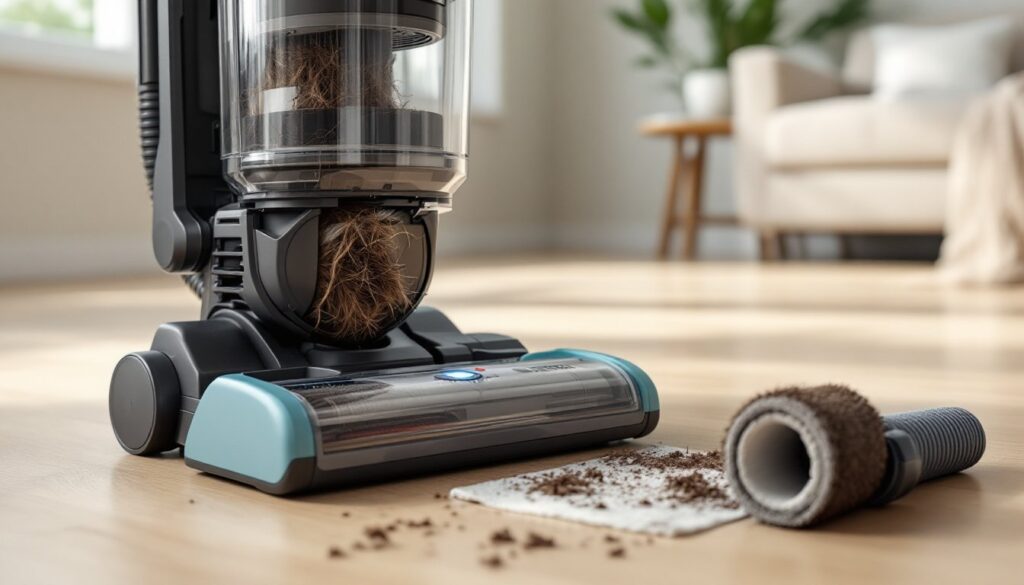
A jammed or damaged brush roll is a frequent source of loud grinding or clicking noises, especially on carpet settings. Hair, string, and fabric threads wrap tightly around the roller and bind the bearings, making the motor work harder and reducing agitation (which impacts suction on carpets).
Tools needed: Scissors or seam ripper, Phillips screwdriver (sometimes), flashlight
Step-by-step inspection:
- Unplug the vacuum and flip it over to access the brush roll.
- Remove the brush roll cover. Most Shark models use clips or tabs: some require unscrewing 2-3 screws. Consult the manual if the cover doesn’t release easily.
- Lift out the brush roll and check both ends for tangled hair or debris. Pet hair often forms a thick mat around the roller and cap ends.
- Cut away tangles with scissors. Work carefully to avoid cutting the bristles. A seam ripper works well for tight wraps near the bearings.
- Inspect the roller for damage: worn bristles, cracks in the plastic core, or a bent shaft. A damaged roller won’t spin smoothly and can make rattling or thumping sounds.
- Check the belt (if equipped). Some Shark models use a rubber belt to drive the brush roll. A stretched, cracked, or broken belt causes the roller to slip or stop, creating a burning smell and loud motor noise. Replacement belts cost $5–$10 and snap on without tools.
- Spin the roller by hand before reinstalling. It should turn freely without resistance or wobble.
Reinstall the brush roll and cover, making sure the roller seats fully in the side brackets. Test the vacuum on carpet. If the brush spins and the noise is gone, the issue is resolved.
Pro tip: Clean the brush roll every month if vacuuming pet hair or long human hair. Prevention beats troubleshooting.
Test the Hose and Connections for Air Leaks
A hissing or whistling noise paired with weak suction usually points to an air leak. When the vacuum can’t maintain a sealed airway, the motor pulls in air from gaps instead of the floor nozzle, which kills suction and makes the unit louder.
Tools needed: Flashlight, electrical tape (for temporary repairs)
Step-by-step leak test:
- Turn on the vacuum and cover the hose inlet (where the hose attaches to the wand or nozzle) with your palm. Suction should pull your hand tight. If it doesn’t, there’s a leak.
- Inspect the hose for cracks or holes. Flex the hose along its length and look for splits, especially near the ends and at bends. A small crack can cause significant suction loss.
- Check connection points: where the hose meets the canister, wand, and floor nozzle. Worn rubber gaskets or loose clips often allow air to escape. Press connections firmly and listen for changes in sound.
- Test the dust canister seal. Remove the canister and inspect the rubber gasket around the rim. Dust buildup or a warped seal prevents a tight fit. Wipe the gasket with a damp cloth and check for cracks.
- Look at the handle and wand joints. Some models have suction-release valves or rotating collars that can crack over time.
Temporary fix: Wrap small hose cracks with electrical tape as a short-term solution. For permanent repair, replace the hose (Shark OEM hoses cost $20–$40) or the affected component.
If the vacuum still loses suction after fixing leaks and clearing clogs, the motor itself may be failing, a sign it’s time to weigh repair costs against replacement.
When to Replace Parts vs. Buy a New Vacuum
Not every loud, low-suction Shark vacuum is worth fixing. Knowing when to order a replacement part versus shopping for a new unit saves time and money.
Replace parts if:
- The vacuum is less than 5 years old and otherwise functional
- The issue is a worn hose, clogged filter, damaged brush roll, or broken belt, all inexpensive fixes ($5–$40)
- The motor runs normally once clogs and leaks are addressed
- Replacement parts are readily available from Shark or third-party suppliers
Consider a new vacuum if:
- The motor itself is failing (burning smell, sparking, or motor runs but produces no suction even with clear airways)
- Multiple components need replacement (hose, filters, brush roll, and canister seals)
- The vacuum is 7+ years old and repairs approach 40–50% of a new unit’s cost
- The model has been discontinued and parts are hard to source
Shark’s warranty typically covers 5 years for upright models, so check coverage before paying for parts. Some retailers offer extended warranties or trade-in credit toward a new model. When shopping for a replacement, testing top-rated models like those featured in expert vacuum reviews helps narrow down options based on floor type, home size, and features.
Cost comparison (2026 estimates):
- Filter set: $10–$20
- Replacement hose: $20–$40
- Brush roll: $15–$30
- Motor assembly: $60–$120 (labor not included)
- New Shark upright: $150–$400 depending on model
If total repairs exceed $80–$100 on an older vacuum, a new unit often makes more financial sense and comes with updated filtration and motor efficiency.
Conclusion
A Shark vacuum with no suction and loud noise is almost always fixable with a systematic check of hoses, filters, brush rolls, and connections. Most issues come down to clogs or worn components that cost under $40 to replace. Start with the simplest checks, clear blockages and clean filters, before moving to mechanical parts. If the motor itself is failing or multiple systems need repair, compare fix costs to a new vacuum’s price. Regular maintenance, especially filter cleaning and brush roll detangling, prevents most suction and noise problems before they start.